Technology
Starlink vs Traditional ISPs: Which Internet Option Is Best for You in Kenya?

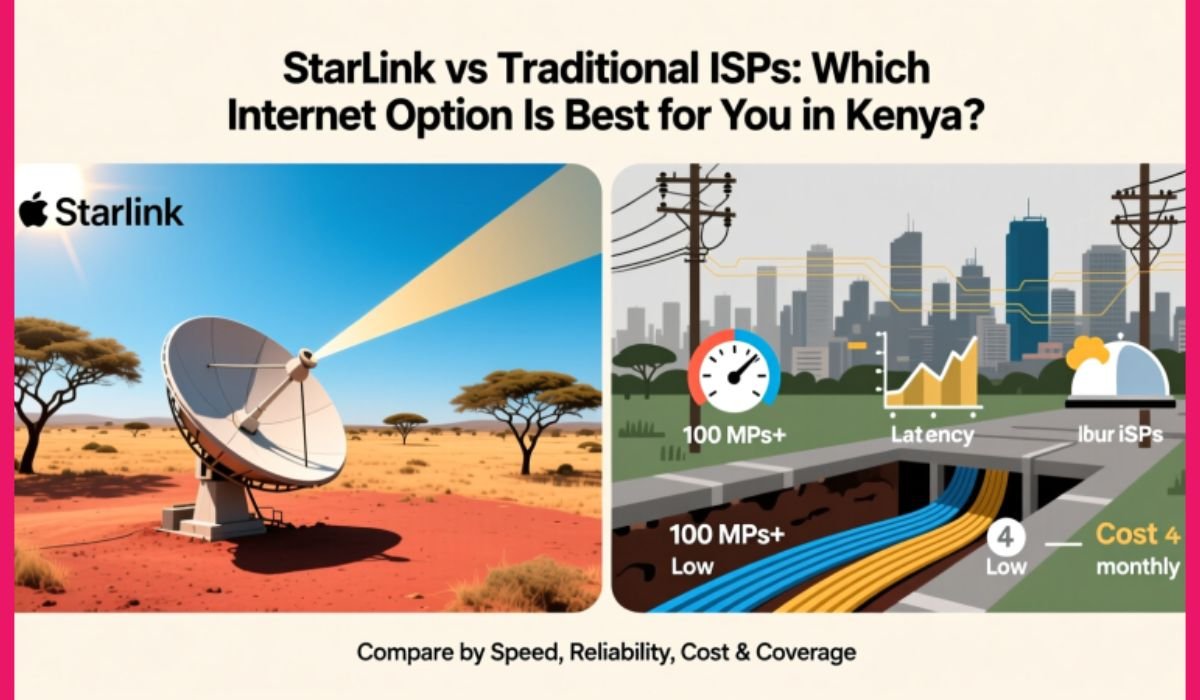
Kenya’s internet landscape has evolved rapidly in recent years, giving consumers more options than ever before. With the arrival of Starlink, a satellite-based internet service, Kenyans now have a completely new way to access fast and reliable connectivity. At the same time, traditional ISPs continue to serve millions of customers through fiber, 4G, and fixed wireless solutions. With so many choices, it can be difficult to know which option best fits your needs. This guide breaks down the differences to help you make an informed decision.
1. Availability and Coverage
Starlink offers nationwide availability through satellite technology, making it possible to access high-speed internet from virtually anywhere in Kenya. This has been especially impactful in underserved regions such as northern Kenya, remote farms, and isolated rural communities. Unlike traditional networks that require physical infrastructure, Starlink simply needs a clear view of the sky, allowing it to bypass challenges like terrain and distance.
Traditional ISPs offer strong coverage in major urban cities like Nairobi, Mombasa, Eldoret, and Kisumu. Fiber networks are expanding, but the rollout is still limited to specific estates and commercial zones. Many rural areas depend on fixed wireless and 4G networks, which can suffer from congestion and inconsistent performance. As a result, traditional ISPs often struggle to guarantee reliable coverage outside cities.
For Kenyans living in remote or rural locations, Starlink clearly provides a significant advantage. Urban users, however, may find that traditional ISPs offer sufficient coverage, especially if fiber is available in their area. Your location plays a major role in determining which provider will serve you best.
2. Speed and Performance
Starlink is known for its impressive speeds, often rivaling or surpassing mid-tier fiber packages. Its low-earth-orbit satellite system significantly reduces latency compared to older satellite technologies, making it suitable for streaming, video conferencing, browsing, and even competitive online gaming. The performance is generally stable across different regions of Kenya, which is a major benefit for remote users.
Traditional ISPs offer a wide range of speeds depending on the technology and package. Fiber provides the fastest and most stable experience, with minimal interruptions during peak hours. However, wireless broadband and 4G-based connections may experience fluctuations based on weather, network traffic, and the distance between the user and the nearest tower. This variability can be frustrating for users who rely on consistent high speeds.
If consistent speed and low latency are your top priorities, Starlink is proving to be a strong and dependable choice. That said, fiber still remains the gold standard where it is available, meaning urban users may enjoy the best performance from a well-established traditional ISP.
3. Installation and Setup
Setting up Starlink is fast and straightforward. Once you receive the kit, the installation process involves positioning the dish, connecting the router, and allowing the system to calibrate. Most users can complete the setup in under an hour without needing technical assistance. This ease of installation is one of the reasons Starlink has gained rapid acceptance across Kenya.
Traditional ISPs vary greatly in their installation process. Fiber installations may require trenching, drilling, or routing cables through walls, depending on the building structure. This can take several days or even weeks, especially in areas that are still undergoing infrastructure development. Wireless installations are quicker but may need fine-tuning to achieve a stable signal.
For those who need immediate internet access—such as new tenants, remote workers, or businesses setting up operations quickly—Starlink offers unmatched convenience. Traditional ISP setups can be more complex but may provide long-term benefits once completed.
4. Cost and Value for Money
Starlink’s equipment cost is higher than that of many traditional ISPs, and this upfront investment can be a barrier for some households. However, its monthly subscription fees remain predictable and transparent, with no hidden charges or location-based variations. For homes or businesses in remote areas, the value of reliable, high-speed connectivity often outweighs the initial cost.
Traditional ISPs offer a broader range of pricing options, making it easier for users to find a plan that suits their budget. Entry-level packages can be very affordable, especially in urban areas where competition is high. However, installation fees, location surcharges, and additional equipment costs can raise the overall expense depending on your specific circumstances.
When evaluating value, consider both reliability and cost. Urban users with access to fiber may find traditional ISPs more cost-effective. In contrast, rural customers who value consistent performance may find Starlink to be the best long-term investment.
5. Reliability and Uptime
Starlink has built a reputation for strong uptime across Kenya. Because its connection does not depend on ground cables or cellular towers, it remains stable even during infrastructure failures, power outages on ISP towers, or network congestion. This consistency is a major advantage for businesses that require uninterrupted connectivity.
Traditional ISPs show excellent reliability on fiber networks, which are less affected by interference or congestion. However, wireless and 4G connections can experience downtime due to weather, tower load, or line-of-sight issues. Rural locations are particularly vulnerable to outages caused by weak signals or damaged infrastructure.
For users who rely on the internet for critical tasks—including remote work, education, online services, and business operations—Starlink’s reliability often stands out. However, those in fiber-enabled areas may still find traditional ISPs to be equally dependable.
Conclusion
Both Starlink and traditional ISPs offer valuable internet solutions for different types of users in Kenya. Starlink shines in rural areas, offers fast installation, and delivers consistent performance across the country. Traditional ISPs excel in urban environments, offer competitive pricing, and provide high-quality fiber where infrastructure is available.
The right choice ultimately depends on your location, budget, and connectivity needs. By understanding the strengths of each option, you can choose the internet service that best supports your home, learning, work, or business goals.

Who Is Chloe Grace Moretz? A Closer Look At Her Life, Career, And Hollywood Journey

Who Is Donatella Versace? The Woman Behind One of Fashion’s Most Iconic Brands

Who Is Bindi Irwin? Inside The Life Of Australia’s Beloved Wildlife Advocate

Who Was Chuck Woolery? A Look At The Life And Legacy Of The Beloved TV Game Show Host

Who Was Drake Hogestyn? Inside The Life And Legacy Of The Days Of Our Lives Star

Who Is Ali Larter? A Closer Look At Her Career, Life, And Legacy

Meet the Young Sheldon Cast Then and Now: Life After the Hit CBS Series

Gilmore Girls Cast Then And Now: Where The Stars Of Stars Hollow Are Today

Who Is Andy Byron? Inside The Life Of The Tech CEO Thrust Into The Spotlight

Who Is Josh Hutcherson? A Friendly Look At His Life, Career, And Rise To Fame
Who Is Chloe Grace Moretz? A Closer Look At Her Life, Career, And Hollywood Journey
Who Is Donatella Versace? The Woman Behind One of Fashion’s Most Iconic Brands
Who Is Bindi Irwin? Inside The Life Of Australia’s Beloved Wildlife Advocate
Who Was Chuck Woolery? A Look At The Life And Legacy Of The Beloved TV Game Show Host
Who Was Drake Hogestyn? Inside The Life And Legacy Of The Days Of Our Lives Star
Who Is Ali Larter? A Closer Look At Her Career, Life, And Legacy
Meet the Young Sheldon Cast Then and Now: Life After the Hit CBS Series
Gilmore Girls Cast Then And Now: Where The Stars Of Stars Hollow Are Today
Who Is Andy Byron? Inside The Life Of The Tech CEO Thrust Into The Spotlight
Who Is Josh Hutcherson? A Friendly Look At His Life, Career, And Rise To Fame

 Celebrity7 months ago
Chris Rock Net Worth: How the Comedy Icon Built His $60 Million Fortune
- Celebrity8 months ago
Eian Burton: Life, Family, and the Story Behind LeVar Burton’s Son
- digital8 months ago
What Is Simpcity? A Complete Guide For New Users
- Entertainment8 months ago
Discover Totallyndfw: Your New Go-To Hub for Fun and Fresh Content