Education
Parental Opt-Out Rights In Education: What Every Family Should Know

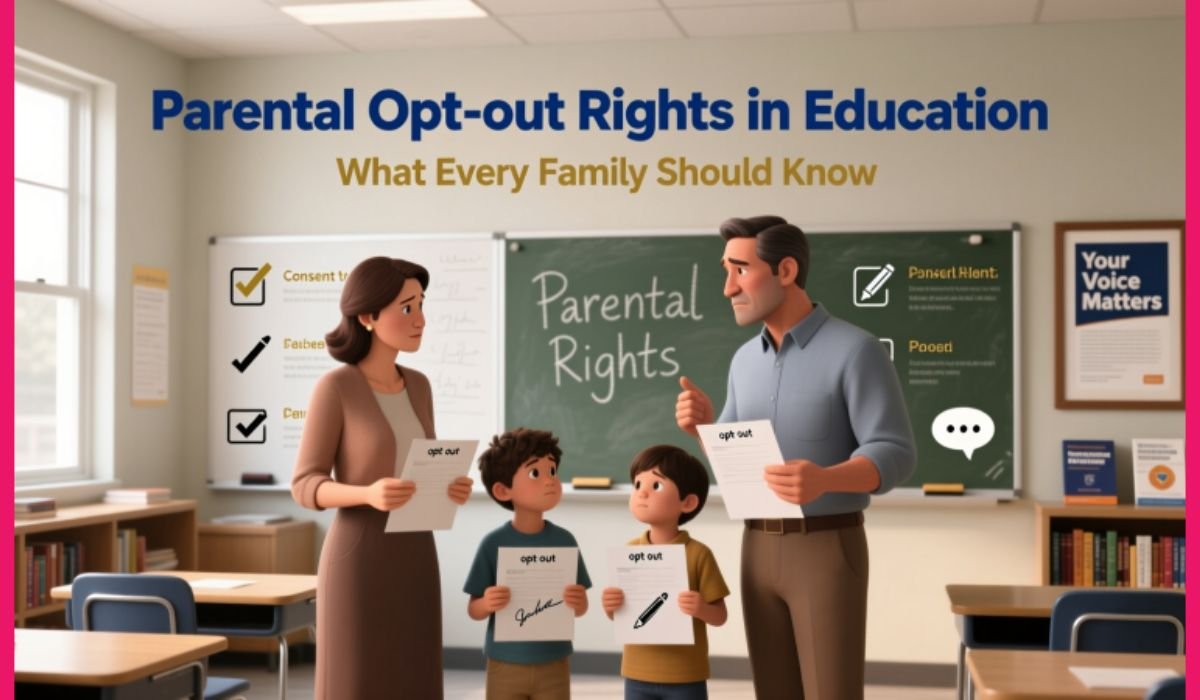
Parental Opt-Out Rights In Education have become one of the most talked-about issues in schools across the United States. Families today are more involved in their children’s learning than ever before, and many want a say in what content their children are exposed to in the classroom. Recent national discussions, court rulings, and curriculum debates have placed this topic at the center of public attention. For many parents, the idea of being able to remove their child from certain lessons feels like an important expression of family values, religious beliefs, or personal boundaries. For educators, however, opt-outs can introduce challenges that affect the flow of learning and the structure of curriculum planning. Understanding how these rights work, what they mean for children, and how schools handle them has never been more important. This article breaks down everything families should know in a simple, friendly, and research-backed way.
Quick Bio Information
The United States Introduced National Religious Opt-Out Requirements In 2025.
Surveys Show Over Sixty Percent Support For Opt-Out Rights.
The Supreme Court Ruling Influenced LGBTQ Curriculum Discussions.
Many Schools Face Logistical Challenges When Handling Opt-Outs.
Teachers Often Create Separate Lessons For Opt-Out Students.
Parents Commonly Opt Out Of Gender And Identity Topics.
Opt-Out Effects Can Influence Long-Term Student Learning.
Public Opinion Is Flexible When People Learn About Downsides.
Curriculum Removal Is A Concern For Many Educators.
Inclusive Learning Helps Students Understand Diverse Perspectives.
Families And Schools Benefit From Open, Respectful Communication.
Understanding Parental Opt-Out Rights In Education
Parental Opt-Out Rights In Education allow parents to request that their child be excused from specific lessons or activities they find inappropriate or conflicting with their beliefs. These rights have existed in various forms for decades, but the modern conversation feels different because school content covers more diverse topics than in the past. Parents may opt out because of moral values, cultural traditions, religious beliefs, or concerns about age-appropriateness. Some worry about discussions involving gender identity, sexual orientation, race, or certain historical perspectives. Others feel strongly that they—not the school—should guide conversations about sensitive topics. These rights do not remove lessons from the curriculum for all students. Instead, they permit individual families to make choices about their own child’s participation. Understanding what opt-out means helps families make informed decisions while recognizing how these choices affect overall learning.
The Legal Landscape Surrounding Opt-Out Rights
The legal status of Parental Opt-Out Rights In Education changed significantly in 2025 after the Supreme Court’s decision in Mahmoud v. Taylor. This ruling stated that public schools must offer a religious opt-out when parents object to lessons that conflict with their faith. Before this decision, opt-out policies varied widely by state and even by district. Some states allowed broad opt-outs, others limited them to topics like sex education, and many left the decision entirely to local school boards. The Supreme Court ruling made religious opt-outs a national requirement, which means schools everywhere must now create systems for handling these requests. While the ruling focused on LGBTQ-inclusive lessons, school districts are approaching it cautiously, knowing that parents may request opt-outs for other topics as well. This ruling continues to shape school policy discussions nationwide, making it vital for families to understand how their rights work and what they can reasonably expect.
Common Subjects Parents Often Opt Out Of
Most opt-outs fall into a predictable group of topics. Many families request exemptions from lessons involving sexual orientation, gender identity, LGBTQ-related literature, or sex education. Others request opt-outs related to racial inequality, social justice discussions, or historical content they believe misrepresents their values. Some parents seek opt-outs from health topics involving puberty, mental health education, or substance abuse. There are also families who object to evolution, certain types of literature, or anything they believe contradicts their religious teachings. Surveys taken from 2022 to 2025 show that while many Americans support parental rights in theory, their views vary depending on the exact subject. Support for opting out of LGBTQ topics is usually higher than support for opting out of race-related lessons. These patterns show how personal beliefs shape parental decisions and explain why schools must navigate complex and sensitive conversations when addressing opt-out requests.
What National Surveys Reveal About Public Opinion
Public opinion on Parental Opt-Out Rights In Education is surprisingly consistent across different surveys. In 2022, a USC national study found 64 percent of Americans supported the general idea of letting parents opt out of lessons they disagree with. In 2023, support remained at 63 percent. A Pew study that same year found strong differences based on subject matter: only 34 percent supported opting out of lessons on racism, while 54 percent supported opting out of lessons on sexual orientation and gender identity. In 2025, a Florida State University study found 61 percent supported religious opt-outs. What these numbers reveal is not strong ideology, but rather a general belief that “parents should have choices.” Interestingly, when people are shown the practical downsides of opt-outs, support drops sharply. This shows that many Americans feel positively about opt-outs as a concept but may not fully consider how they affect classroom learning.
The Hidden Challenges Opt-Outs Create For Schools
While opt-outs may feel straightforward for families, they can add significant complexity to school operations. When several children leave during certain lessons, teachers must prepare alternative materials and supervise separate activities. This interrupts the flow of instruction and creates additional planning work that educators must manage alongside their regular responsibilities. If opt-outs become too common, schools may reduce or remove certain lessons entirely to avoid logistical problems. This can affect a school’s ability to provide a rich and balanced curriculum. Many educators worry that students will miss important opportunities to think critically, discuss multiple viewpoints, and build empathy. These challenges do not mean parents should not use opt-out rights, but they highlight why schools hope families will learn more about how these decisions affect teaching and learning.
How Opt-Outs Affect Students Over Time
Opting out of certain lessons may seem like a small decision at first, but repeated opt-outs can limit a student’s educational experience. When children miss important discussions about culture, identity, or history, they may lose opportunities to understand the world from perspectives different from their own. These lessons help students develop critical thinking skills, empathy, and awareness of social issues. Students who frequently opt out may feel disconnected from classroom conversations or less prepared for advanced coursework where these topics appear again. For students from marginalized groups, curriculum omissions can contribute to feelings of exclusion. Schools aim to create inclusive environments where every child feels represented and valued. Opt-outs can unintentionally impact these efforts, which is why families are encouraged to consider the long-term academic and social effects before making a decision.
Why Families Support Opt-Out Rights
Families who support Parental Opt-Out Rights In Education often do so because they want to ensure their children are raised with values that align with their beliefs. Some worry that schools may introduce topics before their children are emotionally ready. Others feel that certain subjects should be guided by parents at home rather than teachers in a classroom. Many families simply want more transparency in what their children learn. Surveys show that support for opt-out rights often reflects a broader desire for parental involvement in education rather than strong opposition to any specific topic. In a diverse society, families vary widely in beliefs and comfort levels. Supporting opt-out rights allows parents to feel more confident and involved in their child’s educational journey.
What Teachers Wish Parents Understood
Teachers and school staff often wish families could see the bigger picture of how opt-outs affect daily classroom life. Most educators want students to experience a full curriculum designed to build essential skills and encourage thoughtful discussion. When students leave during certain lessons, teachers must shift their plans, adjust group activities, and find ways to keep learning consistent for everyone. Teachers also worry that removing students from discussions sets them apart from their peers, especially when the topics involve identity or diversity. Many educators recommend that families talk openly with teachers before requesting an opt-out. This conversation can help parents understand the purpose of the lesson and often clears up concerns quickly. Collaboration between families and teachers is key to building trust and creating a positive learning environment.
How Communication Influences Public Opinion
One of the most surprising findings in recent research is how easily public opinion on opt-outs can shift when people learn more about the educational effects. In a USC study, participants’ support for opt-outs dropped from 57 percent to 41 percent after reading a short explanation of potential challenges. Even more interesting, these changes remained after nine months when participants were surveyed again. This shows that many families react to opt-outs based on values or instincts but may not have fully explored the consequences. A simple, respectful explanation from educators may help parents think more deeply about the ripple effects of their decisions. Clear communication—from curriculum nights to school newsletters—could help schools and families work together more effectively.
The Balance Between Religious Rights And Inclusive Learning
Finding a balance between religious freedom and inclusive education is one of the most delicate parts of handling opt-outs. The Supreme Court ruling protects the right of parents to request religious exemptions. At the same time, schools have a responsibility to provide an inclusive curriculum that reflects diverse students and prepares young people for a multicultural society. Balancing these needs requires thoughtful communication, transparency, and respect. Schools can explain the purpose of lessons, share instructional materials with parents, and discuss alternative options. Families can share their values while keeping open minds about educational goals. When both sides collaborate, it becomes easier to find solutions that honor beliefs while supporting student learning.
Ways Families And Schools Can Work Together
Collaboration is the strongest tool schools and families have when navigating Parental Opt-Out Rights In Education. Many concerns can be resolved through early communication, like attending curriculum nights or meeting with teachers to understand lesson goals. Schools benefit from learning about families’ beliefs, and families benefit from understanding how lessons build essential skills. Working together reduces misunderstandings and helps ensure that children receive well-rounded and supportive learning experiences. By maintaining open communication, both families and educators can find a balance that respects parental rights while protecting the quality of education.
Final Thoughts
Parental Opt-Out Rights In Education are an important part of today’s educational landscape. Families understandably want to protect their values, guide their children’s growth, and stay engaged in what schools teach. At the same time, opt-outs have real effects on classroom learning, curriculum diversity, and student development. Understanding how these rights work helps parents make thoughtful, informed decisions. When families and schools communicate openly, it becomes easier to find a balance that honors both personal beliefs and educational goals. As the national conversation continues to evolve, staying informed will help families support their children’s learning in meaningful and effective ways.
FAQs About Parental Opt-Out Rights In Education
What Are Parental Opt-Out Rights In Education?
They allow parents to request that their child be excused from specific lessons or activities that conflict with their beliefs or values.
Are Opt-Out Rights The Same In Every State?
No. Policies vary, but the 2025 Supreme Court ruling requires all states to allow religious opt-outs for specific content.
Can Parents Opt Out Of Any Lesson They Want?
Not always. Schools must honor religious objections, but they may limit opt-outs for core academic content or essential skills.
Do Opt-Outs Remove Material From The Curriculum Entirely?
No. They apply only to individual students, although widespread opt-outs may influence school decisions.
How Do Opt-Outs Affect Teachers?
Teachers must create alternate lessons, supervise separate groups, and adjust instruction, which increases workload and planning.
Is Opting Out Harmful To Students?
It can be if used frequently, because students may miss important discussions and opportunities to learn about diverse perspectives.
How Can Parents Make Informed Opt-Out Decisions?
By talking with teachers, reviewing materials, understanding lesson goals, and considering long-term academic and social effects.
People Also Read: Early Childhood Education In The USA: A Simple Guide For Parents And Teachers

Who Is Chloe Grace Moretz? A Closer Look At Her Life, Career, And Hollywood Journey

Who Is Donatella Versace? The Woman Behind One of Fashion’s Most Iconic Brands

Who Is Bindi Irwin? Inside The Life Of Australia’s Beloved Wildlife Advocate

Who Was Chuck Woolery? A Look At The Life And Legacy Of The Beloved TV Game Show Host

Who Was Drake Hogestyn? Inside The Life And Legacy Of The Days Of Our Lives Star

Who Is Ali Larter? A Closer Look At Her Career, Life, And Legacy

Meet the Young Sheldon Cast Then and Now: Life After the Hit CBS Series

Gilmore Girls Cast Then And Now: Where The Stars Of Stars Hollow Are Today

Who Is Andy Byron? Inside The Life Of The Tech CEO Thrust Into The Spotlight

Who Is Josh Hutcherson? A Friendly Look At His Life, Career, And Rise To Fame
Who Is Chloe Grace Moretz? A Closer Look At Her Life, Career, And Hollywood Journey
Who Is Donatella Versace? The Woman Behind One of Fashion’s Most Iconic Brands
Who Is Bindi Irwin? Inside The Life Of Australia’s Beloved Wildlife Advocate
Who Was Chuck Woolery? A Look At The Life And Legacy Of The Beloved TV Game Show Host
Who Was Drake Hogestyn? Inside The Life And Legacy Of The Days Of Our Lives Star
Who Is Ali Larter? A Closer Look At Her Career, Life, And Legacy
Meet the Young Sheldon Cast Then and Now: Life After the Hit CBS Series
Gilmore Girls Cast Then And Now: Where The Stars Of Stars Hollow Are Today
Who Is Andy Byron? Inside The Life Of The Tech CEO Thrust Into The Spotlight
Who Is Josh Hutcherson? A Friendly Look At His Life, Career, And Rise To Fame

 Celebrity8 months ago
Chris Rock Net Worth: How the Comedy Icon Built His $60 Million Fortune
- digital8 months ago
What Is Simpcity? A Complete Guide For New Users
- Celebrity8 months ago
Eian Burton: Life, Family, and the Story Behind LeVar Burton’s Son
- Entertainment8 months ago
Discover Totallyndfw: Your New Go-To Hub for Fun and Fresh Content